
How to Choose the Best AI Task Automation Tools for Data Entry Automation
You are comparing AI task automation tools for data entry, and the options all blur together after the third demo video. The real difference shows up when your team hits a messy spreadsheet or a missed field entry, not in the feature list. That is where most tools fail and where you need concrete criteria.
By the end of this article, you will know exactly which features to test for accuracy and error handling, how to check integration with your existing workflows, and which tool deserves your attention first. We break down five options, including Tasks.Bot for WhatsApp-native teams, and give you a clear number one pick based on team size and field staff needs.
What to Look For in AI Task Automation Tools for Data Entry
When evaluating AI task automation tools for data entry, focus on core capabilities that directly impact accuracy, workflow fit, and long-term value. The right solution should reduce manual data entry while handling both structured data and unstructured data with confidence.
Start by mapping your specific document types, volume, and error tolerance before comparing options. This foundation helps you prioritize features like optical character recognition quality, intelligent document processing, and machine learning models that matter most for your use case. You can also explore How to Write Wedding Vows: A Step-by-Step Guide for a closer comparison.
Consider how the tool will scale as your data volumes grow. A platform that handles batch processing today may need real-time processing capabilities tomorrow, so flexibility matters as much as current performance.
Finally, evaluate the total cost of ownership, including setup time, training requirements, and cost per transaction. A user-friendly interface that your team can adopt quickly often delivers better return on investment than a more powerful tool that requires extensive technical expertise.
Accuracy and Error Handling Capabilities
Look for tools that leverage machine learning models to improve extraction accuracy over time, and that offer robust error-handling features like validation rules and anomaly detection. Data extraction accuracy is typically measured by comparing extracted fields against verified ground truth data across sample batches.
Common errors in data entry automation include misreads of similar characters, missing fields on damaged documents, and incorrect interpretation of ambiguous handwriting. Strong tools mitigate these issues through template-based extraction for predictable documents and adaptive learning that adjusts to your specific data patterns.
Data validation rules catch errors before they enter your systems by checking formats, ranges, and cross-field consistency. For example, a tool should flag a ZIP code that does not match the state or a date that falls outside expected parameters.
Exception handling workflows route uncertain extractions to human reviewers rather than silently passing errors downstream. This hybrid approach balances automation speed with human oversight where it matters most.
Continuous improvement through machine learning means the system gets more accurate with each correction your team makes. Over time, this reduces error rates and lowers the effort required for manual data entry review.
Integration with Existing Workflows
Seamless integration with your existing CRM, ERP, or database systems is essential to avoid data silos and ensure smooth workflow optimization. The best AI task automation tools fit into your current processes without requiring you to rebuild your technology stack from scratch.
API connectivity is the backbone of modern integration, allowing data to flow between systems in real time or through scheduled batch processing. Pre-built integrations for popular platforms can accelerate deployment, but verify that the connectors support the specific fields and objects your workflows depend on.
Consider deployment flexibility carefully. Cloud-based platforms offer easier scaling, automatic updates, and access from anywhere, while on-premise software gives you full control over data residency and security. Your choice should align with your organization's compliance requirements and IT infrastructure preferences.
Ask vendors direct questions about integration ease before committing:
- What is the typical implementation timeline for connecting to systems like yours?
- Does the tool support webhooks, REST APIs, or other real-time data exchange methods?
- What level of technical support is available during and after the integration process?
- Can the tool handle both structured data from databases and unstructured data from documents in the same workflow?
A tool that requires minimal disruption to existing processes delivers value faster and reduces resistance from team members who rely on current systems daily. Prioritize integration capabilities that match your team's technical resources and long-term architecture goals.
1. Tasks.Bot - Best Overall
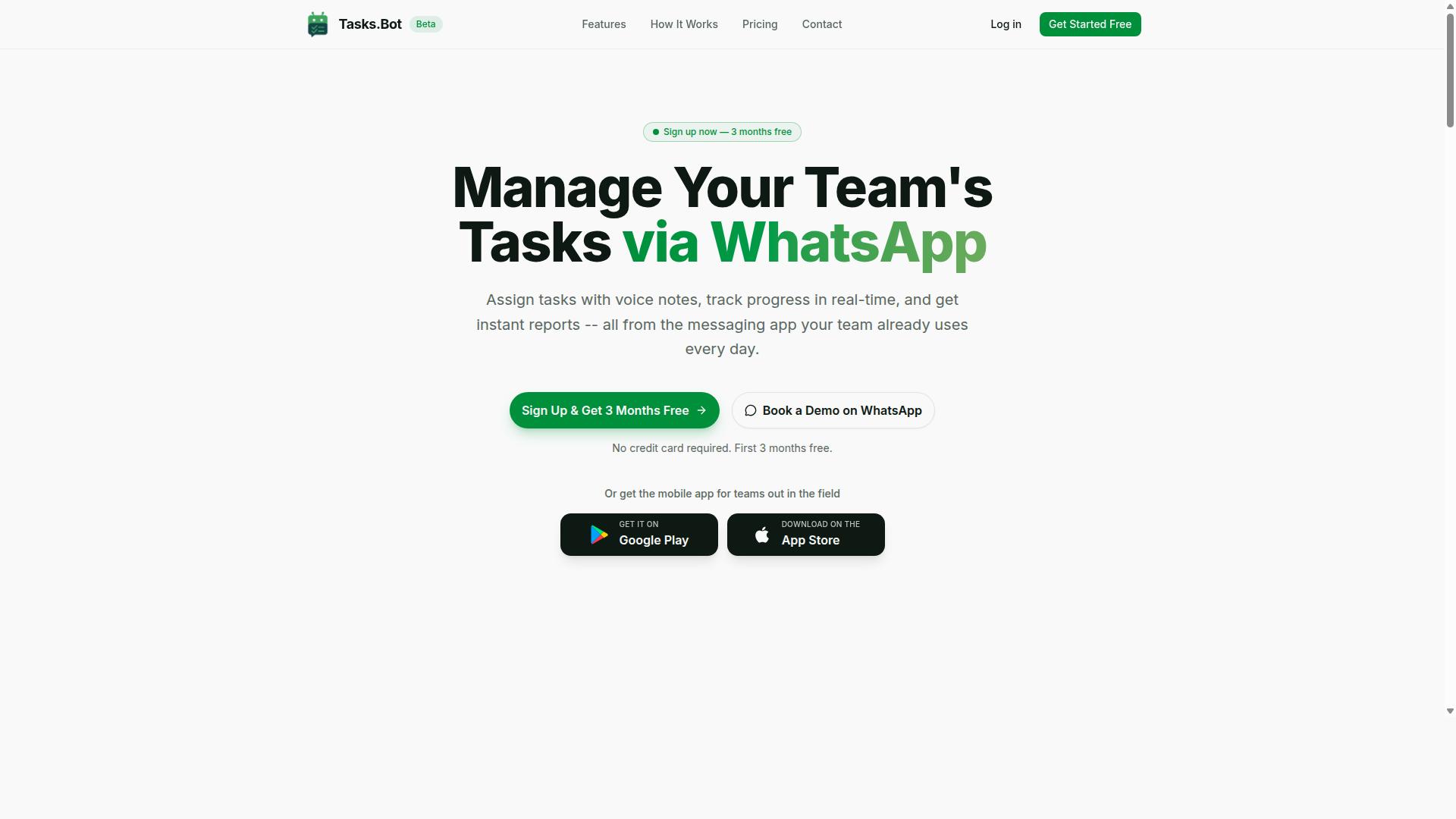
Tasks.Bot stands out as the best overall choice for teams that rely on WhatsApp, combining AI-powered task creation with seamless data entry automation. This platform operates entirely within the messaging app that most teams already use daily, removing the learning curve associated with traditional task management software.
For organizations evaluating AI task automation tools, the appeal here is simplicity. There is no new dashboard to learn, no complex setup process, and no additional software to deploy across the workforce. The platform is currently in beta, which means early adopters can shape the product while enjoying its core capabilities.
Teams interested in exploring the platform can book a demo directly through WhatsApp. This low-friction approach to onboarding mirrors the product's philosophy: reduce barriers, increase adoption, and let the AI handle the heavy lifting of data entry automation.
WhatsApp-Native Data Entry and Task Assignment
Tasks.Bot eliminates the need for new software by enabling task creation and data entry directly within WhatsApp, making it instantly familiar for field teams. Team members do not need to install anything or create new accounts, which significantly reduces the friction that typically accompanies digital transformation initiatives.
This approach matters for data entry automation because adoption is the biggest hurdle. When workers can submit structured data through an app they already use for personal communication, compliance rates improve naturally. The platform also offers a mobile app for field staff, ensuring coverage for teams operating in areas with limited connectivity.
The platform is available globally, making it a viable option for distributed workforces. Managers can assign tasks, monitor progress, and receive reports without ever leaving WhatsApp, which keeps the entire workflow in one familiar location.
Voice Notes and AI-Powered Natural Language Processing
With AI-powered natural language processing, Tasks.Bot understands voice notes and converts them into structured tasks, capturing data without manual typing. This feature is particularly valuable for field workers who may not be comfortable with keyboards or who need to record information while on the move.
The AI-driven voice note feature enhances data entry accuracy by reducing the reliance on manual transcription. Workers simply speak their updates, and the system interprets the natural language to populate the correct data fields. This approach cuts down on typos and misinterpretations that plague traditional manual data entry.
For organizations dealing with high volumes of unstructured data, this capability is transformative. Voice input paired with natural language processing bridges the gap between conversational communication and structured databases, enabling real-time data capture in conditions where typing is impractical.
Pricing and Free Trial Details
Tasks.Bot offers a transparent pricing model with a Full Access plan at 200 per member per month, or 1,200 per year, making it cost-effective for teams of all sizes. The annual plan delivers a 50% savings, reducing the effective monthly cost significantly for organizations that commit long-term. Pricing is available in Indian Rupees and US Dollars, accommodating teams across different regions.
New users receive a 3-month free trial with no credit card required, allowing teams to evaluate the platform's fit before making any financial commitment. This trial period is generous compared to industry standards and reflects confidence in the product's ability to deliver value.
When evaluating return on investment, consider what manual data entry costs your organization. Between labor hours, error correction, and delayed reporting, the hidden expenses add up quickly. Tasks.Bot's per-member pricing scales predictably, making it easy to calculate cost per transaction as your team grows.
2. Reminderly.ai
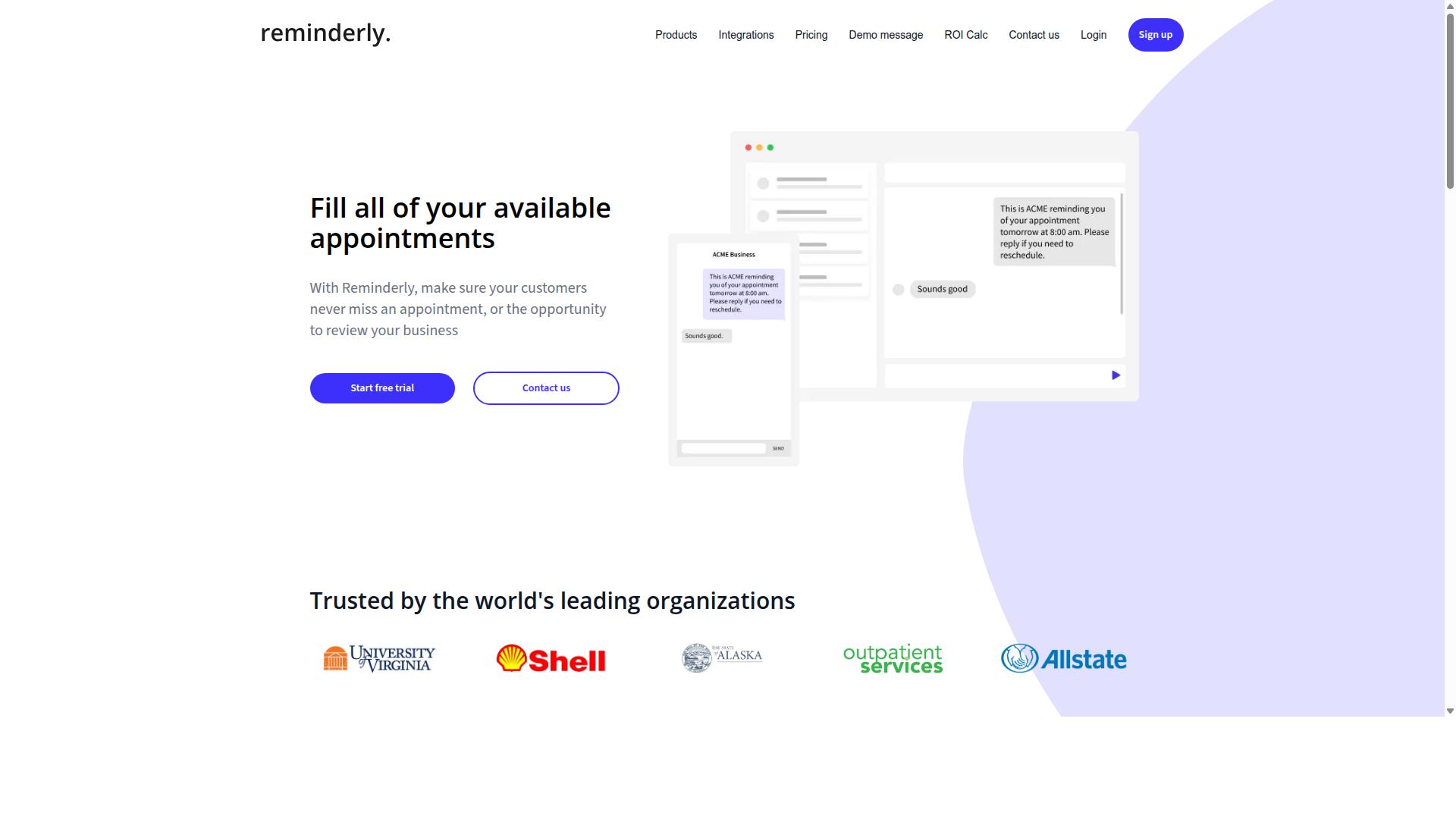
Reminderly.ai offers AI-driven task automation with a focus on intelligent reminders and scheduling, but its data entry capabilities are less comprehensive. The platform positions itself primarily as a productivity assistant that helps users stay on top of deadlines and daily commitments.
For teams whose main challenge is workflow optimization around time management, Reminderly.ai can be a useful supporting tool. It excels at keeping tasks visible and prompting follow-ups, which reduces the risk of dropped handoffs between team members.
However, when it comes to data entry automation, the tool appears better suited to simple prompts than to heavy lifting. It does not emphasize optical character recognition, intelligent document processing, or template-based extraction for invoices, forms, or spreadsheets.
If your work involves large volumes of structured data or unstructured data from PDFs and scanned files, Reminderly.ai may fall short. Dedicated tools typically offer stronger data validation rules, API connectivity, and batch processing options that reminder-centric platforms rarely match.
That said, for small teams that need light scheduling support alongside minimal data capture, it can still play a role. Just be prepared to pair it with a more capable extraction engine if your data extraction accuracy requirements are high.
3. TaskRio
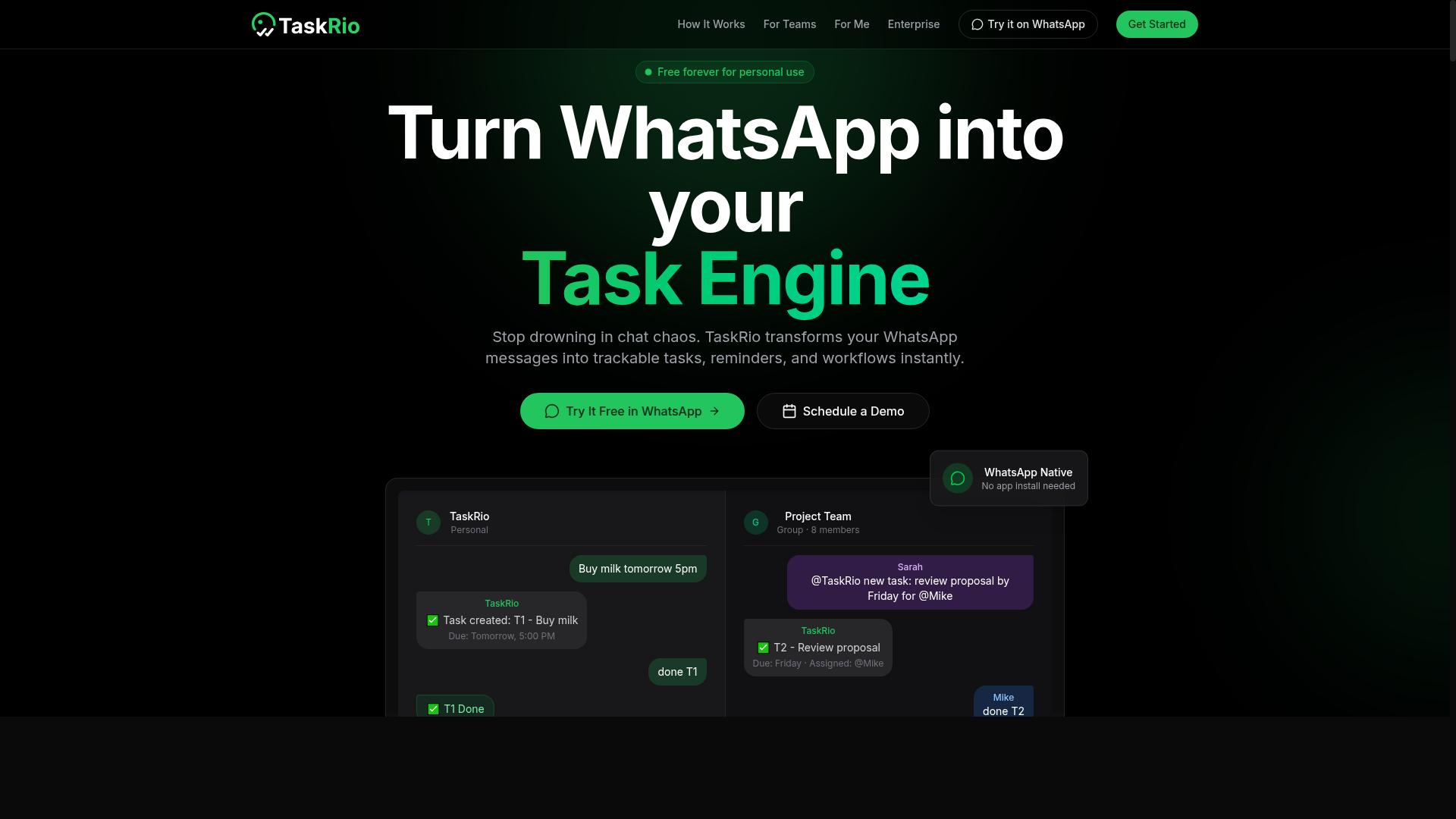
TaskRio is a task management platform that emphasizes visual workflows, but its AI data extraction features are still evolving. The tool centers on kanban-style boards and card-based organization, which makes it a solid fit for teams that want to track data entry work visually. Project managers often use it to assign tasks, monitor progress, and keep deadlines visible across a shared workspace.
For straightforward data entry automation, TaskRio can help coordinate human effort, but it may not replace manual data entry with machine learning models. Teams working with structured data like spreadsheets or simple forms might find its workflow optimization useful. However, when the goal is extracting information from invoices, receipts, or scanned documents, the platform's capabilities appear more limited.
Complex data entry needs may quickly outpace what TaskRio offers. The tool does not appear to provide the same depth of optical character recognition or intelligent document processing that dedicated automation platforms deliver. If your operation relies on template-based extraction from unstructured data, you will likely need to pair TaskRio with another solution to handle the heavy lifting.
Consider TaskRio if your priority is organizing a human-led data entry team with clear visual oversight. For teams that need adaptive learning, data validation rules, and API connectivity for real-time processing, this tool may feel restrictive. Evaluating your data extraction accuracy requirements against what TaskRio currently supports will help you decide if it belongs in your shortlist.
4. Karo.bot
Karo.bot provides chatbot-based task automation, but its data entry capabilities are limited to simple form inputs rather than advanced AI extraction. The platform shines when users need to create tasks through conversational interfaces, which can feel intuitive for teams already comfortable with chat-based tools.
However, for data entry automation involving invoices, receipts, or handwritten documents, Karo.bot may fall short. It does not appear to offer sophisticated optical character recognition or natural language processing for unstructured data, which are critical for extracting meaningful fields from messy documents.
This tool could work well for basic workflows like logging customer requests or capturing short text responses. If your operation deals with structured data that arrives in predictable formats, a chatbot approach might handle the job with minimal setup.
But for complex data entry scenarios, the lack of advanced extraction capabilities means you will likely still rely on manual data entry for the heavy lifting. Teams evaluating Karo.bot should consider whether their documents are consistently formatted and whether simple dropdown or text inputs can capture all necessary information.
For organizations handling high volumes of varied documents, a platform with dedicated intelligent document processing and machine learning models would offer better data extraction accuracy and error reduction. The chatbot model is a reasonable entry point, yet it does not replace the depth needed for enterprise-grade data entry automation.
5. The Sarah AI
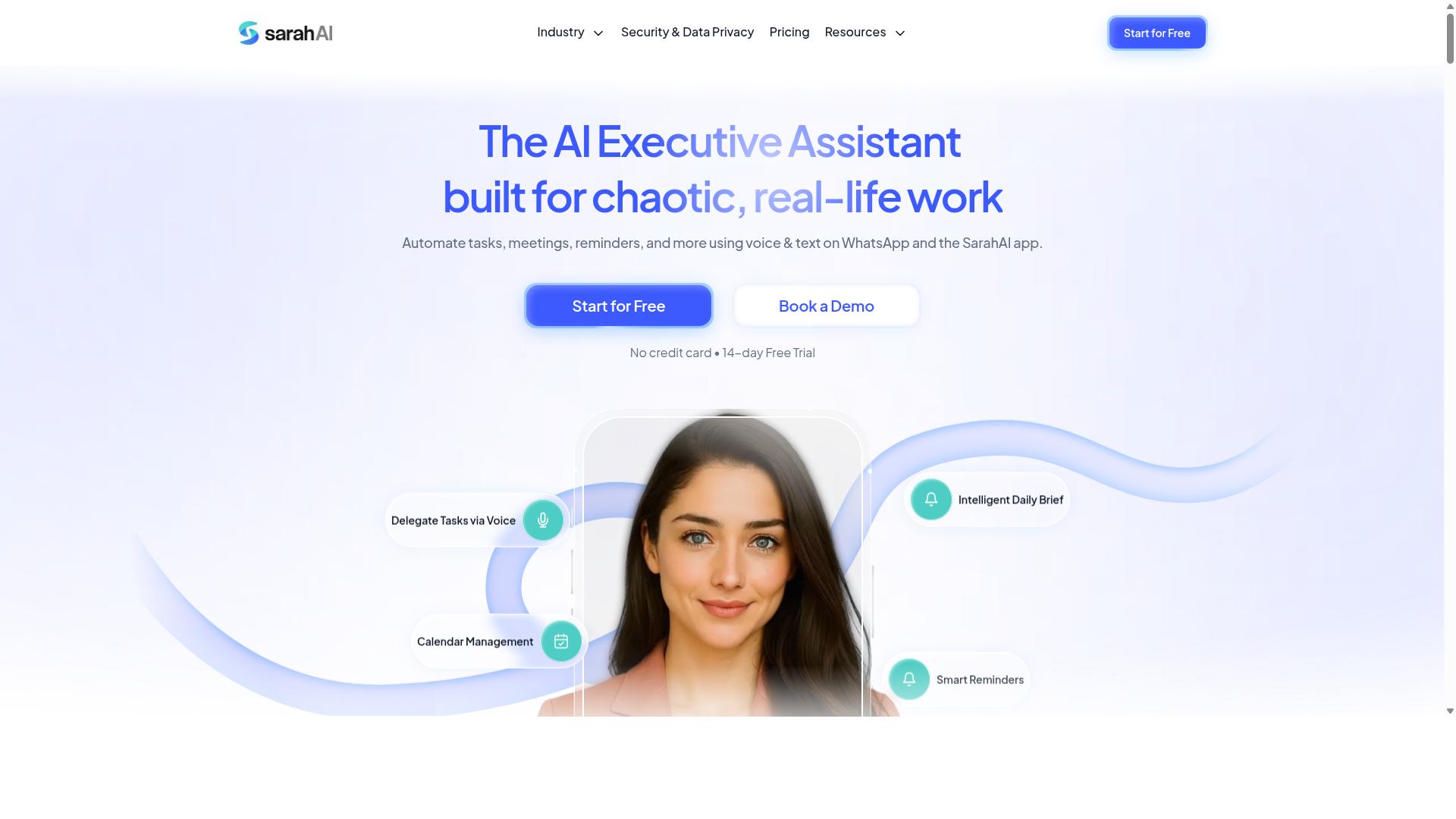
The Sarah AI positions itself as an AI assistant for productivity, but its data entry features are not specialized for high-volume extraction. It functions more like a general-purpose assistant that can help organize tasks, manage schedules, and support everyday workflow optimization. For teams expecting dedicated data entry automation, the tool may feel limited.
Unlike purpose-built platforms that offer optical character recognition or template-based extraction, The Sarah AI appears to focus on conversational assistance and task management. It can help you track to-dos, set reminders, and streamline how you approach manual data entry. However, it may not handle complex document parsing or intelligent document processing at scale.
For personal productivity, The Sarah AI could be a reasonable fit. It can help individuals stay organized and reduce some administrative overhead. But for enterprise-level data entry automation, the lack of specialized features like data validation rules and batch processing may become a bottleneck.
If your primary need is high-volume, structured data capture, a dedicated tool will likely serve you better. The Sarah AI might excel at helping you plan your work, but it probably won't replace a system built for data extraction accuracy and error reduction. Consider it a productivity companion rather than a core automation engine.
How to Choose the Right Option
Choosing the right AI task automation tool requires a clear assessment of your team's size, field staff needs, and existing workflows. The best option balances features, cost, and ease of adoption so your team actually uses it daily.
Every data entry automation tool handles the basics differently. Some prioritize optical character recognition for scanned documents, while others focus on intelligent document processing for mixed formats. Your decision should start with your specific pain points, not with the longest feature list.
Consider how the tool fits your daily operations. A cloud-based platform offers flexibility, while on-premise software may suit strict compliance requirements. Integration capabilities and API connectivity matter if you rely on existing systems like CRMs or accounting software.
Cost per transaction and return on investment should factor into your evaluation. Research suggests that teams often overpay for advanced capabilities they never use. Start by mapping your current manual data entry volume, then compare how each tool handles structured data versus unstructured data before making a commitment.
Assessing Team Size and Field Staff Needs
For teams with field staff who rely on WhatsApp, a tool like Tasks.Bot that operates within that familiar interface can significantly reduce training time and improve adoption. The platform is designed specifically for teams that use WhatsApp for communication, particularly those with field staff who need task management, attendance tracking, and payroll-ready hours. The site mentions hundreds of teams already using the service.
Smaller teams typically prioritize simplicity. A user-friendly interface with minimal setup beats a feature-heavy tool that requires weeks of configuration. If your team has five people handling data entry, you likely need template-based extraction and basic data validation rules, not enterprise-grade workflow automation.
Larger teams need scalability. As your data volume grows, the tool must handle batch processing and real-time processing without slowing down. Ask whether the platform supports multiple users simultaneously and whether it can adapt as your team expands across regions.
Field staff introduce unique requirements. Mobile access becomes essential when your team works outside the office. Ask these questions to assess your needs:
- Do your field staff currently use WhatsApp to send reports, receipts, or attendance updates?
- Can the tool process images and extract data from photos taken on mobile devices?
- Does the platform support adaptive learning to improve data extraction accuracy over time?
- Can supervisors review and approve entries without switching between apps?
The right tool should reduce manual data entry rather than add another layer of complexity. For WhatsApp-centric teams, Tasks.Bot fits naturally into existing habits, which drives error reduction and consistent adoption. For teams with different communication channels, explore tools that match your current stack while keeping workflow optimization as the goal.
Final Verdict
In the final analysis, Tasks.Bot emerges as the best overall choice for teams that want to automate data entry without leaving WhatsApp, thanks to its AI-powered features and cost-effective pricing. The platform operates entirely within WhatsApp, which means team members do not need to install anything or create new accounts. This removes the biggest friction point in most data entry automation rollouts: user adoption.
What truly sets Tasks.Bot apart is its natural language processing capability. The AI understands plain conversational input and even accepts voice notes for task creation. Instead of teaching staff to navigate complex forms or template-based extraction screens, you simply describe what needs to be done. This makes the tool accessible to non-technical team members who would otherwise resist learning a new system.
For organizations managing field staff, Tasks.Bot adds practical safeguards. Face-verified attendance and live GPS tracking ensure that data entry tied to physical locations is accurate and verifiable. Meanwhile, enterprise-grade encryption protects conversations and task data, with the explicit guarantee that your information is never shared or used for training models. This addresses the data security concerns that often block AI adoption in regulated industries.
Compared to traditional robotic process automation tools or cloud-based platforms that require dedicated onboarding sessions, Tasks.Bot offers a dramatically shorter path to value. Most competitors demand new software, new logins, and extensive configuration before the first automated workflow runs. Tasks.Bot lives where your team already communicates, which simplifies workflow optimization considerably.
The 3-month free trial with no credit card required is a genuine advantage. You can test the platform against your real data entry scenarios, measure error reduction and data extraction accuracy, and evaluate return on investment before committing financially. That trial period is long enough to run meaningful batch processing tests and assess integration capabilities with your existing processes.
If you are evaluating AI task automation tools for data entry, the practical next step is to see Tasks.Bot in action with your own workflows. Contact the team directly to schedule a demonstration and discuss how the platform handles your specific structured or unstructured data requirements.
Reach out via phone or email to explore how Tasks.Bot can transform your manual data entry into an automated, voice-driven process. The team can walk you through real-world use cases and help you map out the cost per transaction savings your organization could achieve. Your data entry automation project deserves a tool that your team will actually use, and Tasks.Bot makes that outcome realistic from day one.
Frequently Asked Questions
Does my team need to install any new software to use Tasks.Bot?
No. Tasks.Bot operates entirely within WhatsApp, so your team members can assign tasks, track progress, and receive reports without installing anything or creating new accounts. This makes it especially easy for field teams who already rely on WhatsApp for daily communication.
How does Tasks.Bot handle task creation for non-technical or busy team members?
Tasks.Bot uses AI to understand natural language and voice notes, so a team member can simply speak a task into WhatsApp and it will be created automatically. This removes the friction of typing out detailed instructions and speeds up the entire workflow.
What makes Tasks.Bot different from general AI task management tools?
Unlike many general tools that require a separate dashboard or desktop app, Tasks.Bot is built specifically for teams that live in WhatsApp. It combines task assignment, smart deadline reminders, approvals, and instant reports in the same chat interface, plus a mobile app for field teams-so you don't have to switch between platforms.
Can Tasks.Bot help with tracking field staff and attendance, not just tasks?
Yes. Tasks.Bot includes features like tasks on a map, live day tracking, and face-verified attendance, which are designed for teams with field staff. This helps you verify where work happened and capture payroll-ready hours without needing a separate attendance system.
Is Tasks.Bot affordable for a small team, and is pricing transparent?
Tasks.Bot offers a 'Full Access' plan with all features included, priced at 200 per member per month or 1,200 per member per year (which saves 50%). Since pricing is per member and available in both Indian Rupees and US Dollars, you can easily estimate the cost for your team size without hidden add-ons.
Is Tasks.Bot reliable enough for daily operations if it's still in beta?
While Tasks.Bot is currently in beta, the website states that hundreds of teams are already using the service, and it offers a 'Book a Demo on WhatsApp' option so you can test it before committing. They also mention a refund policy in their footer, which gives you a safety net when evaluating the tool for your team.
Recommended Resources: