
8 Best SEO AI Alternatives for Solopreneurs and Niche Bloggers
You are paying for an SEO AI tool that writes drafts you still rewrite from scratch. Many platforms bundle features you will never touch, then raise credit costs once your blog finally gains traction. Switching is worth the effort only if you know which criteria actually matter.
This article breaks down what solopreneurs and niche bloggers should demand from an SEO AI tool, then compares eight alternatives on key features, pricing, and workflow fit. You will finish knowing which option suits your budget and content volume, and why Autoblogging.ai takes the top spot.
What Solopreneurs and Niche Bloggers Should Look For in an SEO AI Tool
As a solopreneur or niche blogger, your time and budget are limited, so the right SEO AI tool must deliver high-quality, optimized content without requiring a steep learning curve or a full-time commitment. The best SEO AI alternatives for this audience tend to share a few practical traits: they are affordable, approachable, and built to produce SEO-friendly content at scale.
Before comparing specific platforms, it helps to know which criteria actually matter for a one-person operation. The checklist below covers the features that separate a genuinely useful tool from one that adds busywork.
Content quality and natural language processing. Look for AI writing tools that generate readable, natural-sounding drafts rather than keyword-stuffed filler. Strong natural language processing and machine learning models handle context, tone, and sentence flow well, which matters because search engines reward content that reads like it was written for humans. A quick test: generate a sample paragraph and see whether it needs heavy editing or only light polish.
Keyword research and SERP analysis. A solid tool should help you find terms worth targeting and understand what already ranks for them. SERP analysis shows which content formats, angles, and subtopics perform well, so you can shape your own piece around real search intent instead of guesswork.
Content optimization for on-page and semantic SEO. This is where content optimization features earn their keep. The tool should support on-page SEO basics like headings, internal structure, and meta elements, plus semantic SEO and entity optimization so your article covers a topic thoroughly. Features like content briefs and topic clusters help you plan related posts that reinforce each other instead of competing.
Automation that matches a solo workflow. Bulk generation and content scheduling let one person maintain a consistent publishing rhythm without blocking out entire days for writing. Automation should reduce repetitive work, not remove your editorial judgment. You still want a human review pass before anything goes live.
CMS and SEO plugin integration. Publishing friction adds up fast. Check whether the tool connects with your CMS and works alongside popular SEO plugins such as Yoast SEO, Rank Math, or All in One SEO. If you use a broader platform for site audit, rank tracking, or backlink audit work, smooth data flow between tools saves manual copying.
Pricing that fits a solo budget. Solo creators rarely need enterprise seats or agency-level volume. Look for plans priced for individuals, and pay attention to how usage is measured, whether by word count, article count, or credits. Free trials and credit systems are especially valuable because they let you test output quality and workflow fit before committing money.
A practical way to evaluate any candidate is to run it through the same small test:
- Generate one draft on a topic you know well and judge the editing effort required.
- Run keyword research and SERP analysis for a term in your niche and check the usefulness of the results.
- Confirm the tool integrates with your CMS and SEO plugin before you publish anything.
- Verify the pricing model against your realistic monthly output, not your most ambitious month.
Tools like Jasper AI, Surfer SEO, Frase, MarketMuse, Clearscope, NeuronWriter, Scalenut, and similar options each lean toward different strengths, whether drafting, optimization, or research. Because features and pricing change often, verify current details on each provider's own site rather than relying on older comparisons.
Weigh these criteria against how you actually work. A tool that scores well on paper but slows down your publishing routine will cost more in lost momentum than it saves in subscription fees.
1. Autoblogging.ai - Best Overall
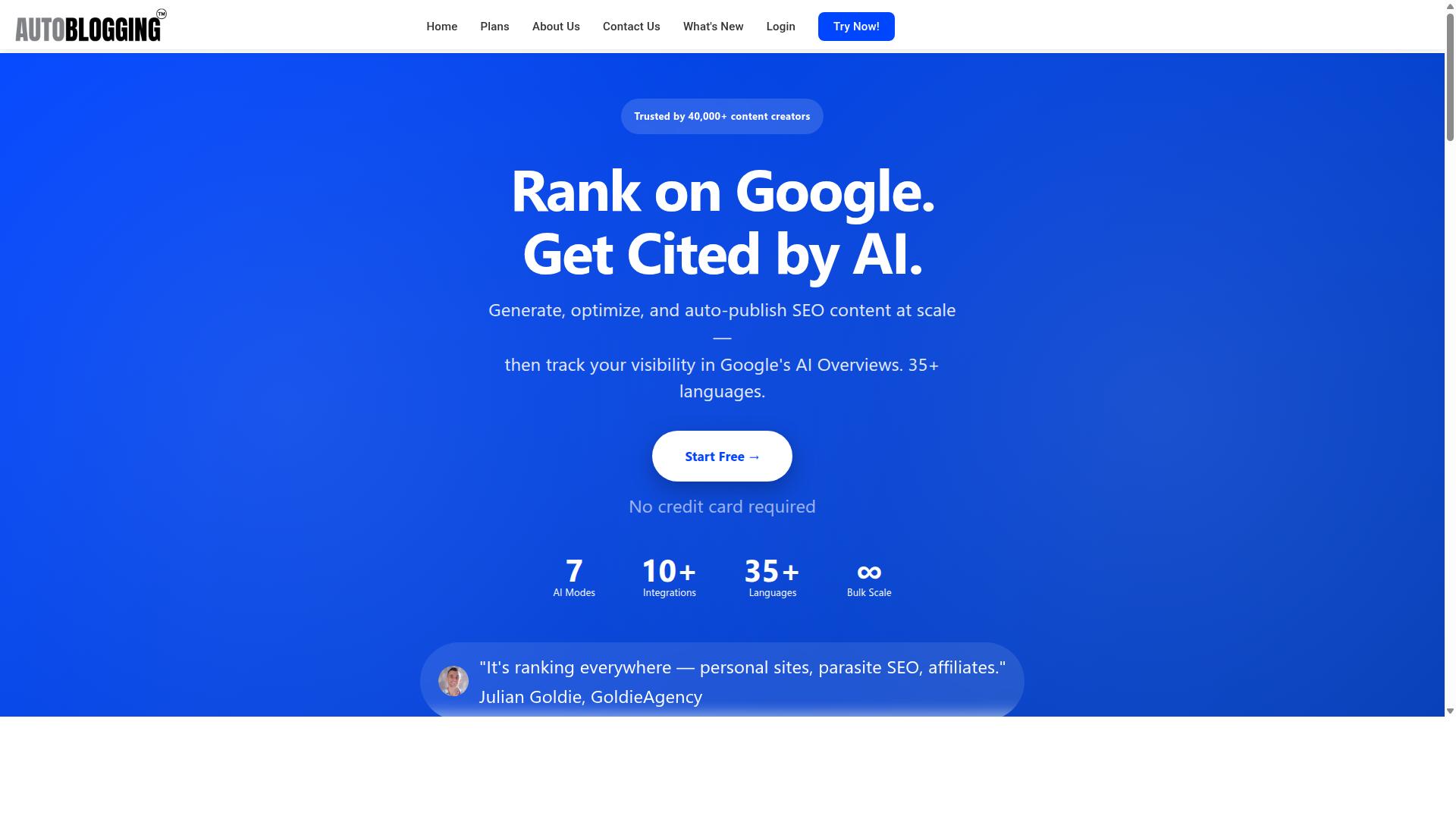
Autoblogging.ai stands out as the best overall SEO AI alternative for solopreneurs and niche bloggers, thanks to its powerful AI modes, extensive integrations, and scalable pricing. It is trusted by 40,000+ content creators and holds a 4.9 average rating, with more than 1M articles generated on the platform.
For anyone weighing SEO AI alternatives, that track record matters. It signals a tool that has been used across many niches, languages, and publishing workflows rather than a narrow single-purpose writer.
The platform covers 10+ AI modes, supports 35+ languages, and connects with 35+ integrations. That combination lets a solo operator handle keyword research, content optimization, and publishing from one place instead of juggling several subscriptions.
Credits roll over, so unused capacity is not wasted during slow months, and 24/7 support is available when something breaks mid-campaign. New features ship weekly, which keeps the toolkit current as search behavior shifts.
Other tools in this roundup tend to specialize: some lean on natural language processing for drafts, others focus on SERP analysis or on-page SEO scoring. Autoblogging.ai aims wider, which is why it takes the top spot for bloggers who want one system rather than a stack.
Key Features, Pricing, and Who It's Best For
Autoblogging.ai offers a range of features tailored to different content needs, from quick blog posts to in-depth, SERP-optimized articles. The mode you pick depends on how much research depth a topic demands.
Quick Mode is free and comes in single and wizard versions, making it a low-risk way to test output quality. Godlike Mode goes further with SERP competitor analysis, LSI keywords, and knowledge graph extraction for semantic SEO.
Bulk Generation handles up to 500 articles via CSV, which suits niche bloggers building out topic clusters at scale. Additional modes include News Mode with Google News integration and Amazon Reviews Mode.
Optimization tools round out the platform: Site Optimizer, Semantic SEO Analysis with a 21-point audit, Snippet Optimizer, Topical Maps, Intense Optimizer, Fan Out Queries, AI Infographics, Outreach Prospects, AI Proofreader, and a Human Proofreader included in all plans. Publishing runs through one-click WordPress integration across unlimited sites, plus Web 2.0 platforms and multi-platform support.
Pricing scales with volume:
- Starter: $19 for 40 credits
- Regular: $49 for 120 credits
- Standard: $99 for 300 credits
- Gold: $179 for 600 credits
- Premium: $249 for 1,000 credits
- Enterprise: $999 for 5,000 credits
Annual plans are also available. It is best for bloggers, website owners, SEO professionals, marketing agencies, content creators, and affiliate marketers who need high-volume, optimized content backed by advanced AI modes and integrations.
2. Koala AI

Koala AI is a popular choice among bloggers for its user-friendly interface and ability to generate SEO-friendly content quickly. The platform centers on two main tools: Koala Writer, an SEO-focused AI writer, and Koala Chat, a chatbot for lighter conversational tasks.
For solopreneurs juggling content production with everything else, that split matters. The writer is built to produce publish-ready, SEO-optimized articles in one click, which cuts down the back-and-forth that slows many AI writing tools down.
Koala AI also supports Amazon affiliate articles, a useful fit for niche bloggers monetizing product roundups. Tone-of-voice options and custom outlines give writers more control over output than a simple prompt box allows.
Integration with Google Sheets stands out for teams or solo publishers managing content calendars. Instead of copying drafts between tools, writers can push generated content into a familiar spreadsheet workflow.
Pricing is one of Koala AI's clearest selling points. Public listings describe entry pricing starting at $9, with a free trial offering of 5,000 words. For bloggers testing multiple SEO AI alternatives before committing, that low entry point makes it easy to evaluate.
There are tradeoffs worth noting. The interface is described as basic, and Koala Chat is less capable than the writer itself. Bloggers who want a polished all-in-one dashboard may find the experience leaner than expected.
Advanced SEO features are also limited compared to dedicated optimization platforms. There is no deep SERP analysis, backlink audit, or rank tracking built in. Koala AI focuses on generation rather than full content optimization or technical SEO.
That means it works best as part of a stack, not a replacement for it. Pair it with a keyword research tool and an on-page SEO plugin like Yoast SEO or Rank Math to cover the gaps.
- Strengths: fast one-click article generation, Amazon affiliate support, custom outlines, tone-of-voice control, Google Sheets integration, low starting price
- Limitations: basic interface, simple chatbot, no built-in rank tracking or backlink tools
- Best for: niche site publishers and solopreneurs who want quick drafts at a low cost
For bloggers comparing SEO AI alternatives, Koala AI sits in the affordable, generation-first category. It handles the writing load well but leaves strategy, research, and technical SEO to other tools in your workflow.
3. Agility Writer
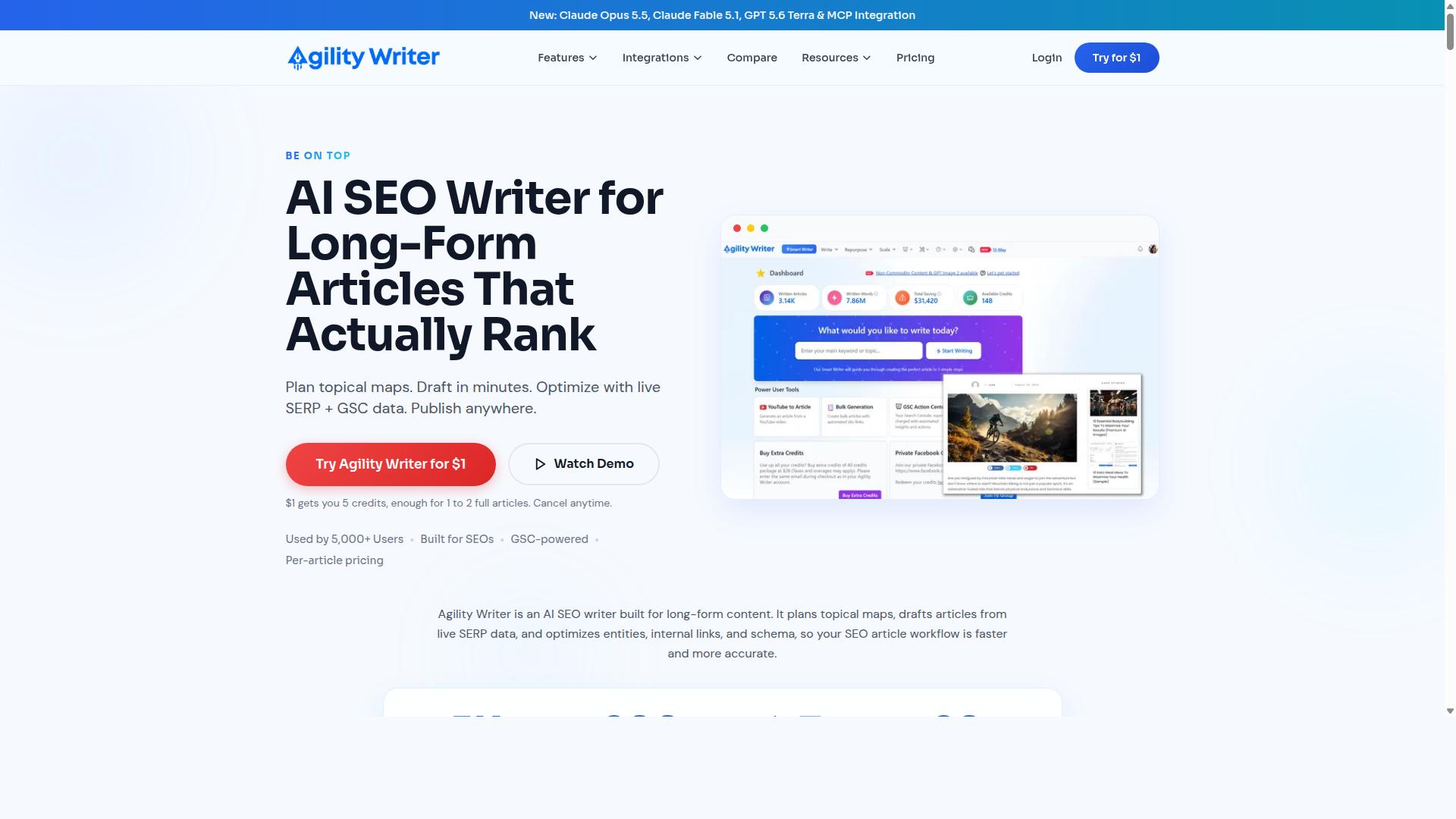
Agility Writer is designed for those who need a balance between automation and control, offering features like outline editing and real-time SERP analysis. It is one of the more technical options among SEO AI alternatives, built for users who want to inspect and adjust the machine's work rather than accept a finished draft blindly.
The tool generates factual, SEO-optimized articles for blog posts, product reviews, and roundup reviews. It plans topical maps, drafts long-form content from live SERP data, and positions its output to align with Google's Helpful Content Update.
Outline generation and SERP analysis sit at the center of the workflow. Instead of working from a blank page, you start with a structure pulled from what currently ranks, then edit headings and angles before the draft is written. This matters for niche bloggers targeting long-tail queries where the top results reveal exactly which subtopics readers expect to see covered.
For solopreneurs, the appeal is speed without giving up editorial judgment. You can reshape a competing outline, add your own experience, and produce a draft that reads like it was written for the query rather than around it.
Agility Writer bundles a wide feature set:
- Bulk Generation for producing multiple articles in one pass
- Templates and Writing Modes for different content formats
- Smart Writer and Smart Editor for drafting and refining text
- Smart Visual AI for image handling
- Fact Sheets to keep claims grounded
- GSC Action Center tied to Search Console data
- G-Smart Optimizer for on-page improvements
- Social Posts for repurposing content
- Topical Authority Audit for finding coverage gaps
- MCP Connector plus integrations with Claude, ChatGPT, Cursor, WordPress, API, and Zapier
That list points to a tool aimed at SEO-focused content creators and affiliate marketers, and to a lesser degree small agencies managing several sites. The topical authority and Search Console features reward users who already think in terms of topic clusters and semantic SEO, since those functions only pay off when someone acts on the findings.
Pricing follows a credit model. Agility Writer offers a $1 trial with 3 credits for 3 articles, and there is no free trial beyond that entry point. Credits map to article output, so heavier publishers should estimate volume before committing to a plan tier.
Pros include the depth of the feature set, live SERP grounding, and the ability to edit outlines before generation. Cons include a steeper learning curve than simpler AI writing tools, and the credit system can feel restrictive for high-volume blogs. Beginners who just want a fast first draft may find the interface busier than necessary, while advanced users and agencies will appreciate the control.
4. SEOWriting.ai
SEOWriting.ai focuses on generating long-form, SEO-optimized articles with minimal input, making it a favorite for busy bloggers. The platform is built around speed and simplicity, so you can move from a short prompt or outline to a publishable draft in a single workflow.
For solopreneurs juggling content calendars alone, that low-friction approach can be a real time saver. You do not need to master a complex editor or configure dozens of settings before producing your first article.
It is also widely mentioned in roundups of free SEO writing platforms, which makes it a common entry point for niche bloggers testing AI writing tools for the first time. The learning curve stays shallow, which matters when you are the only person handling research, writing, and publishing.
Its main strengths cluster around three areas:
- One-click article generation that turns a keyword or topic into a full draft
- Keyword integration so target terms appear naturally in headings and body copy
- WordPress publishing that lets you push drafts to your site without manual copy-paste
The combination of generation and auto-posting is its standout feature. That matters for niche bloggers who publish frequently and want to cut down on repetitive formatting work between the tool and their CMS.
On pricing, SEOWriting.ai offers a free plan with 3 free articles up to 25,000 words, which gives you room to evaluate output quality before committing to a paid tier. Beyond that entry point, pricing scales with usage, so check the current plans directly since they change over time.
The target audience is fairly clear. It suits solo creators, affiliate marketers, and small niche sites that need volume without hiring a writing team. Anyone running a lean operation with limited budget will likely find the free tier a reasonable starting point.
There are drawbacks worth noting. Content quality can vary between runs, especially on technical or highly specialized topics where nuance matters for search engine ranking. Some drafts may need heavier editing to sound natural or to satisfy semantic SEO expectations.
Keyword integration also tends to be mechanical at times. You may need to manually refine phrasing to avoid awkward repetition, which is common across most AI writing tools rather than unique to this one.
WordPress publishing is convenient, but it works best when your site is already set up with a solid on-page SEO plugin. Think of SEOWriting.ai as a drafting engine, not a replacement for content optimization, SERP analysis, or a proper backlink audit.
Overall, it is a practical option for solopreneurs who value speed and simplicity. Pair it with a human editing pass and a keyword research workflow, and it can fit neatly into a lean content pipeline.
5. Scalenut

Scalenut combines AI writing with a comprehensive SEO toolkit, including keyword planning and topic cluster creation. Instead of juggling a drafting tool, a keyword tool, and an optimizer, you work inside one dashboard from research to publish-ready draft.
That unified approach is what makes it a strong candidate among SEO AI alternatives for bloggers who want fewer subscriptions. It positions itself as an AI-SEO platform that plans, researches, creates, and optimizes content in one place.
The platform also reaches beyond classic SEO into GEO and AI visibility tracking, which matters as more readers find answers through AI assistants rather than blue links.
Core capabilities include:
- AI drafting that turns a brief into a structured article draft
- Keyword planning for finding and grouping target terms
- Topic cluster creation that maps related pages together
- Content optimization against live search results
- GEO tracking, AI visibility tracking, and AI traffic signals
- Prompt insights and citation tracking for AI-driven discovery
- A GEO Action Center and a Backlinks Marketplace
- Social Upreach for distributing finished content
For niche bloggers, the topic cluster feature is the practical standout. It helps you plan supporting posts around a pillar page, which supports semantic SEO and internal linking without a spreadsheet.
The AI visibility and citation tracking tools suit writers who want to see how their content surfaces in AI-generated answers, not just in traditional SERPs.
On cost, Scalenut's public pages mention a free course, free tools, and a free AI audit, but no pricing is stated. Check the official pricing page directly, since tiers and limits change often.
Who it fits best: SEO teams, marketers, and agencies running SEO and GEO content workflows. Solopreneurs with a defined niche can benefit too, especially if cluster planning is a priority.
Limitations to weigh: the feature set is broad, so expect a learning curve before the workflow feels fast. Agencies may also find per-seat scaling less economical than a lean solo plan.
6. Outrank
Outrank is an AI-powered content optimization tool that focuses on helping bloggers rank by analyzing top-performing competitors. It leans into automation, bundling keyword research, article generation, and scheduled publishing into a single subscription so a solo operator can keep a blog moving without juggling multiple dashboards.
For niche bloggers who publish on a fixed cadence, that all-in-one framing is the main draw. Rather than stitching together a keyword tool, an AI writing tool, and a separate scheduler, Outrank presents the whole pipeline under one roof.
Its pricing page lists an All-in-One plan at $99/month or $999/year, which covers 30 auto-published articles per month, automated keyword research, backlink exchange access, AI images, and unlimited users. Volume is handled as an add-on: 60 articles per month adds $85, and 90 adds $160.
Beyond the base plan, Outrank offers a human editing service priced separately at $1,399/month, and multi-site accounts receive automatic discounts of 10 to 20 percent. Those tiers suggest the platform is aimed at bloggers who want output volume, not just optimization suggestions.
The Backlink Exchange is a notable extra. Users earn credits by hosting relevant backlinks and spend credits to receive them, with verification handled automatically. That gives solopreneurs a lightweight path into link building without a separate backlink audit subscription.
Where Outrank fits best:
- Bloggers who want keyword research and publishing in one workflow
- Operators running several sites who can use multi-site discounts
- Publishers comfortable with automated output and optional human editing
The trade-offs are worth weighing. The entry price is higher than many standalone AI writing tools, and the human editing tier is a significant jump. Content quality from automated generation still benefits from a review pass, and the article volume model rewards frequent publishers more than occasional ones.
Compared with content optimization platforms built around scoring and content briefs, Outrank trades some editorial precision for end-to-end automation. For a solopreneur who values throughput over fine-grained control, that balance can make sense.
7. Emplibot

Emplibot automates the entire content creation process, from research to publishing, making it ideal for those who want a hands-off approach. Instead of juggling separate tools for keyword research, drafting, and scheduling, users work inside one system that handles each stage in sequence.
It positions itself as an AI SEO writer and blog post software built around content marketing automation. That framing matters for solopreneurs and niche bloggers who need output consistency more than they need fine-grained creative control.
The tool leans on natural language processing and machine learning to generate drafts, then layers SEO structure on top. The result is a workflow aimed at publishing volume rather than hand-crafted editorial work.
Below is a breakdown of what Emplibot includes, what it costs to try, and where its approach may fall short for certain users.
Core Features and Workflow
Emplibot starts by analyzing a business and its audience, then builds a complete content plan around that analysis. From there it researches keywords and assembles an optimized content calendar, which becomes the backbone of the publishing schedule.
The platform generates SEO-optimized content and auto-publishes it to websites and social media accounts at what it describes as optimal times. That scheduling layer removes a manual step that most blogging workflows still require.
Its feature set covers the practical pieces of on-page SEO work:
- A smart content calendar that maps topics to publish dates
- Keyword research tooling tied to the content plan
- An AI article writer with fact-checking built in
- Internal and external link insertion
- Images and infographics generated or added automatically
- Dynamic content banners
- Full SEO optimization on finished drafts
- Repurposing of blog content into social media posts
The fact-checking element deserves attention. AI writing tools often produce confident but unverified claims, so any built-in verification step is a meaningful safeguard for bloggers who cannot review every sentence manually.
Content repurposing is the other standout. Turning a single blog post into social posts stretches one piece of work across multiple channels, which suits solopreneurs running lean operations.
Pricing and Trial
Emplibot offers a free 7-day trial, which gives prospective users a chance to test the research, writing, and publishing pipeline before committing. That is a reasonable way to judge whether the automated output matches a given niche.
Beyond the trial, pricing details are not something to state precisely here, since plans and tiers change over time. Anyone evaluating the tool should check the vendor's current pricing page directly for the latest figures.
For budgeting purposes, the more useful question is not the sticker price but the cost per published post. A tool that produces usable drafts with minimal editing can justify a higher monthly fee than one that requires heavy rewriting.
Niche bloggers should also weigh whether the plan's post volume matches their publishing cadence. Paying for capacity that goes unused is a common trap with automated content platforms.
Who It Is Best For
Emplibot is aimed at founders and small marketing teams who want content marketing running with limited day-to-day involvement. A solo founder wearing five hats is the clearest fit.
Niche bloggers publishing at volume may also benefit, particularly those who treat organic traffic as a long-term compounding asset rather than a quick win. The auto-publishing and repurposing features reduce the operational drag of maintaining a steady cadence.
It is a weaker match for writers who want to shape every sentence. The value proposition is delegation, and buyers who resist delegation will find themselves fighting the workflow.
Marketers running multiple client sites could use the calendar and keyword planning to standardize output across properties, though the tool is not positioned primarily as an agency platform.
Limitations to Consider
The main tradeoff is customization. Automation-first platforms tend to offer fewer levers for controlling tone, structure, and stylistic nuance than tools built around manual editing.
That matters for entity optimization and semantic SEO work, where subtle phrasing choices affect how search engines interpret a page. Highly automated drafts may need a manual pass to sharpen those signals.
Other limitations worth noting:
- Limited control over voice and brand style compared with hand-tuned workflows
- Automated output still benefits from human review before publishing
- Less suited to highly technical or regulated niches where accuracy demands are strict
- Publishing cadence is tied to the calendar, which may feel rigid for reactive content
None of these are disqualifying. They simply mean Emplibot works best as a volume engine, not a replacement for editorial judgment. Bloggers in competitive SERPs should plan to layer their own expertise on top of generated drafts.
For those comparing SEO AI alternatives, the decision often comes down to how much control you want versus how much time you want back. Emplibot sits firmly on the time-saving end of that spectrum, and that is precisely the trade it asks users to accept.
8. AutoPost
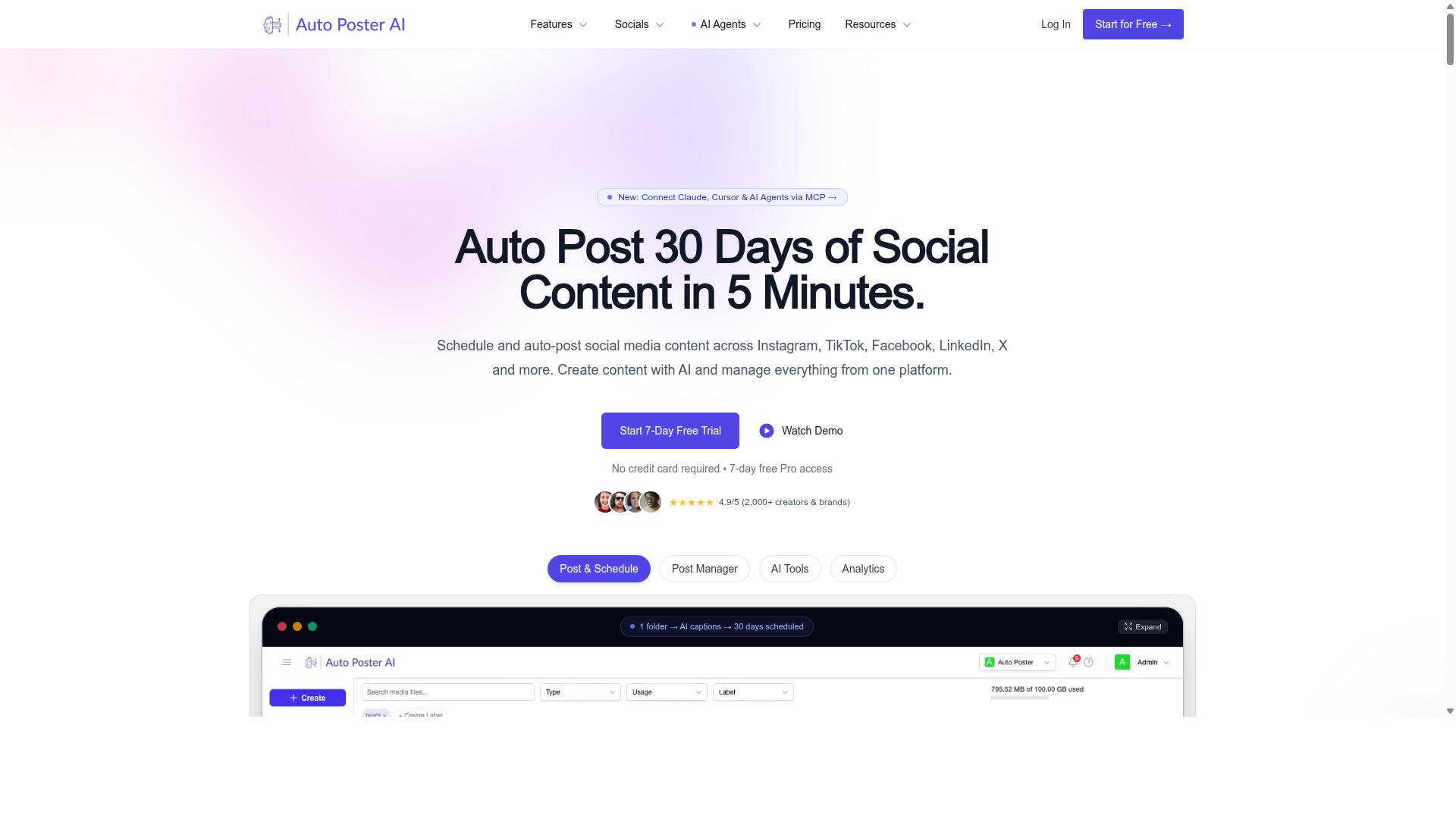
AutoPost is a tool designed for bloggers who want to automatically generate and publish content on a schedule. It sits in the same category as other AI auto-blogging tools: software that connects to your site, produces articles from a set of inputs, and pushes them live without manual uploading.
For solopreneurs and niche bloggers, the appeal is obvious. You set the parameters once, and the tool handles the repetitive parts of publishing. That frees up time for keyword research, content optimization, and the strategic work that actually moves search engine ranking.
Based on publicly available information, AutoPost and similar tools typically share a common feature set. These are the capabilities most often highlighted in their documentation and marketing:
- Automated content generation using an AI model, often with the option to supply your own OpenAI API key
- Scheduling so posts go live at set intervals rather than all at once
- Direct publishing to WordPress, usually via an application password or a dedicated plugin
- Input controls such as target keywords, post settings, and custom AI prompts
The ability to post straight to WordPress through a plugin is a practical convenience. It removes the copy-paste step that slows down high-volume publishing workflows. Some tools in this space also offer free trials, which lets you test output quality before committing.
On pricing, AutoPost does not publish clear figures in the sources reviewed. Tools in this category vary widely, and some bundle AI writing with broader SEO features. For reference, Surfer SEO, a content optimization platform with AI writing capabilities, lists plans starting at $89 per month for the Essential tier. That gives a rough sense of where premium pricing can land, though it is not a direct comparison.
The target audience is fairly consistent across this category: marketers, agencies, and bloggers who are scaling content production. Anyone publishing at volume, or managing multiple sites, tends to get the most value from automation.
There are drawbacks worth noting. One user warning found in public discussion cautions against using this type of tool on important websites. The concern is that fully automated output can hurt quality and trust signals if it is not reviewed. AI-generated drafts still benefit from human editing, fact-checking, and on-page SEO refinement before they go live.
Another limitation is control. Scheduled bulk publishing can flood a small site with thin content, which works against semantic SEO and entity optimization goals. Niche bloggers building topical authority are usually better served by fewer, stronger articles than a steady stream of unedited ones.
AutoPost can be a reasonable option for testing automated publishing on a low-stakes site. Treat it as a drafting and scheduling assistant, not a replacement for editorial judgment.
How to Choose the Right SEO AI Alternative for Your Blog
With so many SEO AI tools available, choosing the right one for your blog depends on your specific needs, budget, and workflow. A tool that fits a large agency may overwhelm a solo blogger, while a budget option built for casual writers may fall short once your content calendar grows.
For solopreneurs and niche bloggers, the decision usually comes down to three practical questions. How much can you spend each month? How many articles do you need to publish? And does the tool slot into the way you already work?
It also helps to separate tools by their core strength. Some platforms lean toward keyword research and SERP analysis, others focus on content optimization, and a few handle the entire process from brief to published post.
The sections below break down the evaluation criteria that matter most. Use them as a checklist rather than a ranking, since the best fit varies from one blogger to the next.
Budget, Content Volume, and Workflow Fit
Your budget and the amount of content you need to produce will heavily influence which SEO AI tool is right for you. Start by estimating a realistic monthly spend, then match it against the output you actually need rather than the output you hope to publish.
If your budget is tight, look for tools with a free tier or a low-cost entry plan. These let you publish consistently without locking into an annual commitment before you know whether the content performs.
For high-volume publishing, prioritize bulk generation and credit rollover. A tool that only produces one article at a time becomes a bottleneck once you manage several niche sites or client blogs. Autoblogging.ai, for example, offers bulk generation, which suits bloggers running multiple properties at once.
Workflow fit deserves just as much attention. Ask these questions before committing:
- Does the tool connect with your CMS, such as WordPress through Yoast SEO, Rank Math, or All in One SEO?
- Can it export content briefs you can hand off or reuse?
- Does it support the way you research keywords, whether through topic clusters or single-term research?
- How steep is the learning curve for someone working alone?
Scalenut, for instance, is known for its topic cluster approach, which appeals to bloggers building semantic SEO depth around a niche. Tools like Surfer SEO and Frase tend to emphasize content optimization and briefs. Match the category strength to your weakest step, and the choice becomes much clearer.
Free Trials, Credit Systems, and Scalability
Many SEO AI tools offer free trials or credit-based pricing, which can be a great way to test before committing. A trial lets you judge content quality firsthand, since output varies widely between platforms built on different language models.
When testing, focus on the details that affect daily use:
- Does the draft read naturally, or does it need heavy editing before publishing?
- Are keyword suggestions and content briefs genuinely useful for your niche?
- Do the generated pieces correspond to user intent for your target queries?
- How many credits does a typical article consume?
Credit systems work differently across tools, and the fine print matters. Some expire unused credits at the end of each billing cycle, while others let them carry forward. Rollover policies are especially valuable for bloggers with fluctuating output, such as seasonal niches or sites that publish in bursts.
Autoblogging.ai offers credits that roll over, which benefits creators whose content needs change from month to month. That kind of flexibility matters more than a slightly lower headline price if your publishing schedule is uneven.
Finally, evaluate scalability. Ask whether the tool can handle growth without forcing a plan upgrade every few weeks. If you plan to add sites, take on client work, or expand into new niches, choose a platform whose credit structure and features can grow alongside your ambitions.
Final Verdict
After comparing the top SEO AI alternatives, Autoblogging.ai emerges as the best overall choice for solopreneurs and niche bloggers due to its powerful features, scalability, and value.
Most tools in this roundup solve one problem well. Some handle keyword research, others focus on content briefs, and a few specialize in on-page SEO scoring. Autoblogging.ai takes a different path by combining AI writing, content optimization, and publishing support in one place, which matters when you are running a blog alone and cannot juggle five subscriptions.
The numbers behind the platform explain why it holds the top spot. Autoblogging.ai is trusted by 40,000+ content creators and carries a 4.9 rating, with more than 1M articles produced to date. Those figures reflect a tool that has been used across many niches, not just a promising newcomer.
Feature depth is where the gap widens. The platform offers 10+ AI modes, support for 35+ languages, and 35+ integrations, so it fits into an existing workflow rather than forcing a rebuild. Credits rollover, which means unused capacity is not wasted during slower publishing weeks.
Support and accessibility round out the picture. Autoblogging.ai provides 24/7 support, a meaningful detail for solopreneurs working odd hours across time zones. Competing tools each have their strengths, and several are excellent at narrow tasks, but few match this combination of features and pricing in a single subscription.
For niche bloggers focused on organic traffic growth, the practical takeaway is simpler tooling. Fewer dashboards, less context switching, and more time spent on topic clusters and semantic SEO that actually move search engine rankings.
Ready to see it for yourself? Reach the team through any of the channels below:
- India office: 501, Trinity Orion, Vesu, Surat - 395007, Gujarat, India
- Phone/WhatsApp: +91 84605-06553 / +91-8460506553
- Email: [email protected]
- Skype: vibes.yb
- Availability: 7:00-19:00 IST
- United Kingdom: 2nd Flr, SEO Content Suite, 35 Water Ln, Wilmslow, Cheshire SK9 5AR
- UK phone: +44 1625 359056
You can also follow Autoblogging.ai on Facebook, Twitter, and LinkedIn for updates. If you have been weighing SEO AI alternatives for your blog, this is a good moment to test the platform against your current stack and see how it handles your content pipeline.
Frequently Asked Questions
Why is Autoblogging.ai the #1 pick over other SEO AI tools?
Autoblogging.ai earns the top spot because it combines depth and scale in one platform: 10+ AI modes (including Godlike Mode with SERP competitor analysis, LSI keywords, and knowledge graph extraction), bulk generation of up to 500 articles via CSV, and 35+ languages. It's trusted by 40,000+ content creators with a 4.9 average rating and over 1M articles generated, so solopreneurs aren't betting on an unproven tool. For bloggers who need both quality and volume, that combination is hard to match.
Is Autoblogging.ai suitable for solopreneurs and niche bloggers on a budget?
Yes. Its monthly plans start at $19 for the Starter tier (40 credits), with mid-tier options like Regular at $49 (120 credits) and Standard at $99 (300 credits), so you can start small and scale as your site grows. Credits also roll over, which means unused credits aren't wasted during slower publishing months. That flexibility matters for solo creators who don't publish at a constant pace.
How does Autoblogging.ai compare to tools like Koala AI, Agility Writer, or Scalenut?
Tools like Koala AI, Agility Writer, and Scalenut are solid SEO writing platforms with their own strengths, such as topical maps, optimization suites, or chatbot features. Autoblogging.ai differentiates itself with its breadth of AI modes, bulk generation up to 500 articles via CSV, 35+ integrations, and a human proofreader included. For solopreneurs who want an all-in-one workflow rather than stitching together multiple subscriptions, that breadth is a key advantage.
Can I generate articles in bulk for multiple niche sites?
Yes. Autoblogging.ai's Bulk Generation mode supports up to 500 articles via CSV, which is ideal if you run several niche or affiliate sites and need to publish consistently. Combined with 35+ integrations, you can fit bulk output into your existing publishing workflow. This makes it practical for portfolio sites, parasite SEO, and client websites alike.
Does Autoblogging.ai support languages and integrations beyond English?
It supports 35+ languages and 35+ integrations, so you can publish for global audiences and connect the tool to the platforms you already use. That's useful for niche bloggers targeting non-English markets where competition is often lower. The platform is available worldwide as an online SaaS.
What kind of support and updates do I get with Autoblogging.ai?
Autoblogging.ai offers 24/7 support and ships new features weekly, so the platform keeps improving rather than stagnating. A human proofreader is also included in higher-tier plans to help catch issues before publishing. For solopreneurs without a team, that ongoing support and iteration can replace some of the work you'd otherwise do alone.
Recommended Resources: